

The Engine Coolant Temperature Sensor is a thermistor. The resistance of the Engine Coolant Temperature Sensor changes inversely to the temperature of the engine coolant. When the coolant is cold, the sensor resistance is high. As the temperature of the coolant increases, the sensor resistance decreases.
The Engine Control Module (ECM) monitors the voltage drop across the Engine Coolant Temperature Sensor.
The coolant temperature signal is used to calculate fuel injection and to evaluate operating conditions of the engine coolant temperature. Examples of conditions that may cause high coolant temperature are: thermostat failure, fan failure, heavy load, high ambient temperatures and radiator blockage.
The sensor’s signal is monitored by the Engine Control Module (ECM).
The engine control module (ECM) will set a diagnostic trouble code (DTC) and derate the engine to avoid engine damage if the sensor signal is not within predetermined limits, or the signal is not rational.
Conditions for diagnostic trouble code (DTC):
1) The sensor signal is stuck
2) Sensor value does not change with changing conditions
3) Extreme variation in sensor values
Probable cause
1) Air in the coolant
2) Wiring harness
3) Connector
4) Engine coolant temperature sensor
5) Thermostat
-
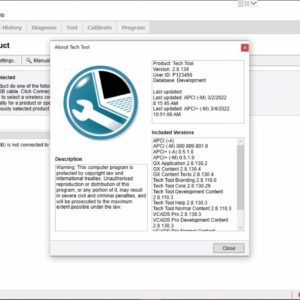
Volvo Premium Tech Tool PTT 2.8.130 Diagnostic Software 04.2022 ACPI ( 1 PC )
Trucks software $143.00
Related products
-
Detroit DD15 EPA10 (2010-13) Fault Code: SPN 91 FMI 3 (CPC) Circuit Failed High
DD15 EPA10 (2010-13) -
Volvo All Engines (2010 Emissions) Fault Code: SPN 3064 FMI 0 PID: PPID 326 Aftertreatment DPF Soot Level
All Engines (2010 Emissions) -
Volvo All Engines (2017 Emissions) Fault Code: P112F00 PID: EMS Engine Rear Start Switch “A” Circuit High
All Engines (2017 Emissions) -
Volvo All Engines (2017 Emissions) Fault Code: P003011 PID: EMS HO2S Heater Control Bank 1 Sensor 1
All Engines (2017 Emissions) -
Volvo All Engines (2017 Emissions) Fault Code: P203A86 PID: EMS Reductant Level Sensor “A”
All Engines (2017 Emissions)